LeBlanc.ca
Welcome
Welcome
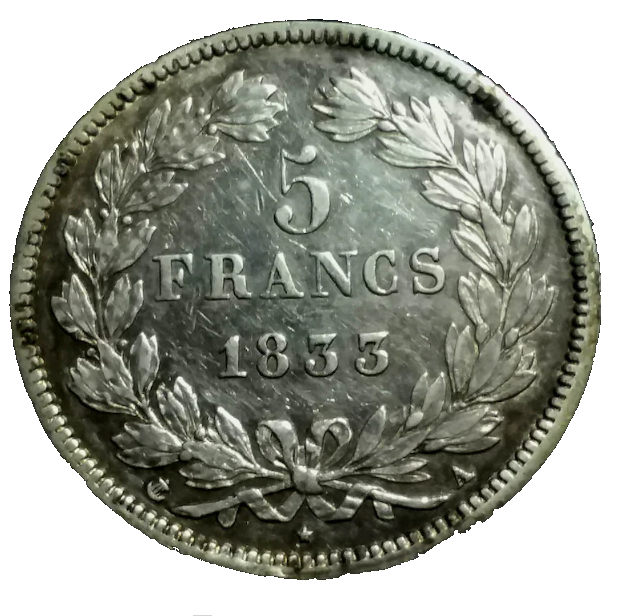 -Antoine LeBlanc-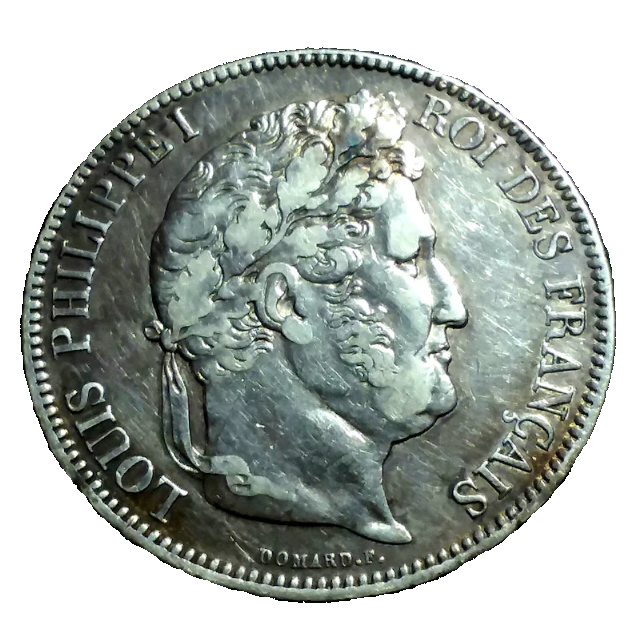
1802 - 1833
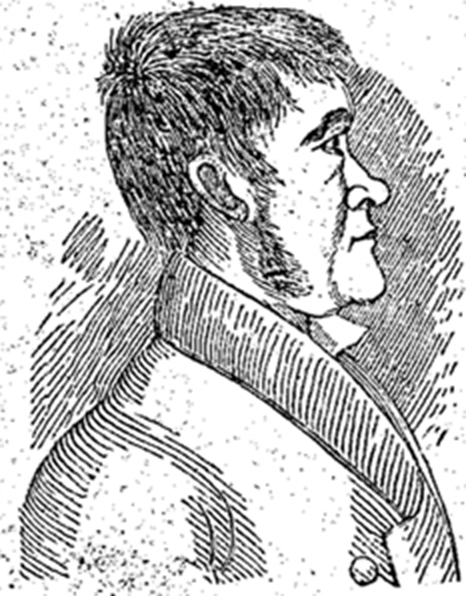

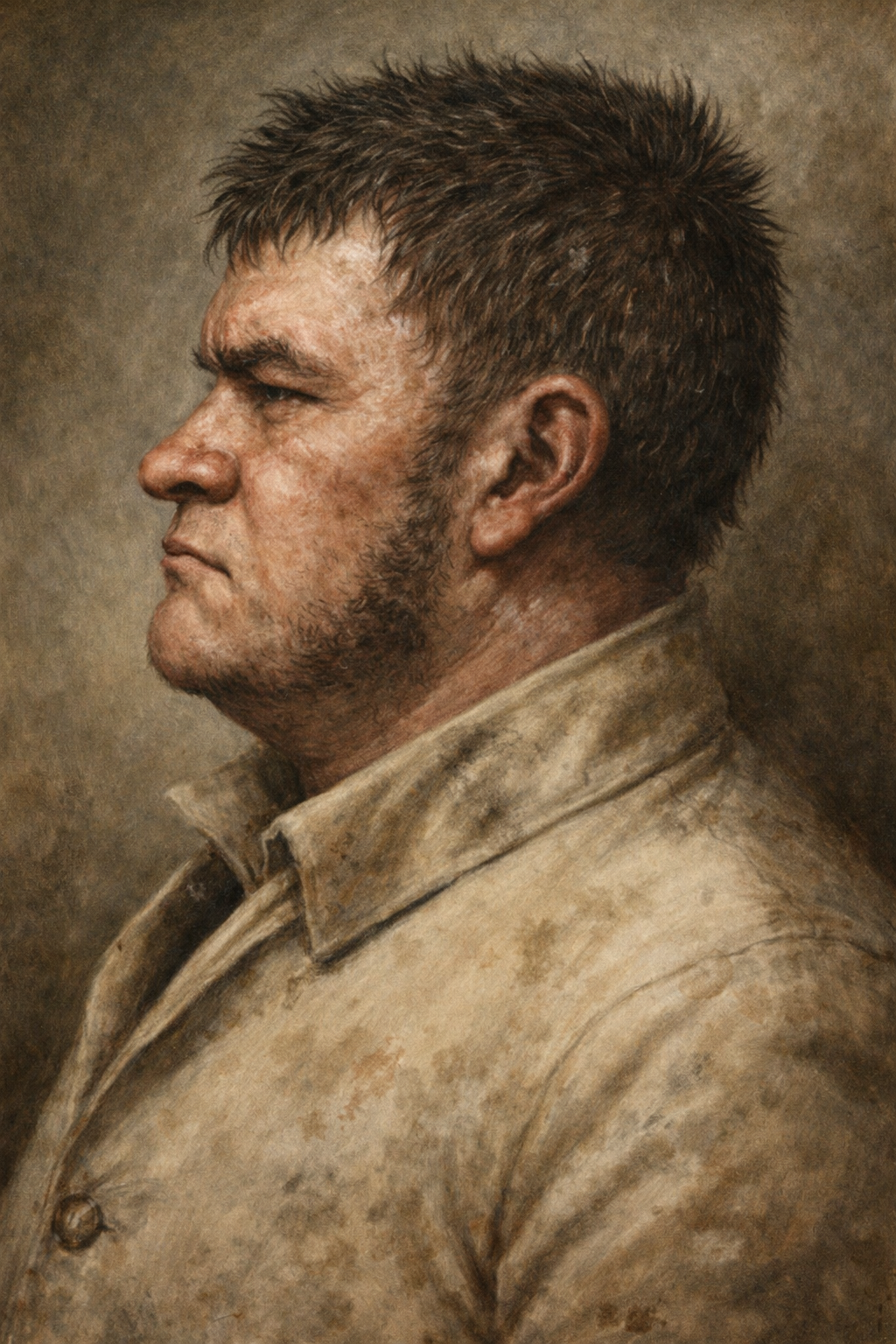
Trial details
Summarized
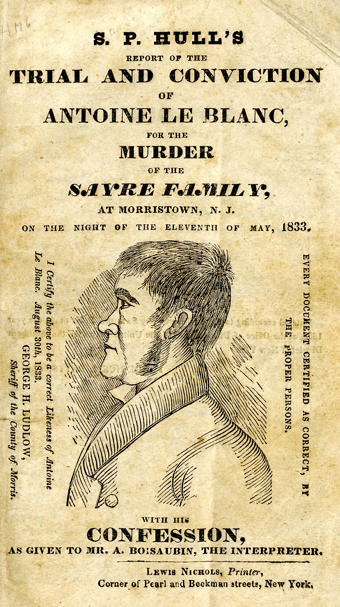
State of New Jersey vs ANTOINE LEBLANC on the charge of Murder
State of New Jersey vs ANTOINE LEBLANC on the charge of Murder
Judge - GABRIEL H. FORD Esq. Associate Justice.
Council for the State - HENRY A. FORD, Esq. Prosecutor of the PLEAS, associated with JOHN R. BROWN and JACOB W. MILLER, Esqrs.
Council for the Prisoner- FRANCIS R. M’CULLOCH, WILLIAM HALSEY, and N. W. WEISE, Esqrs., who were appointed by the Court to defend the Prisoner.
13 August 1833 Monday: The Trial commenced, An oath was administered to Mr. Louis Theodore Snyder, the Interpreter, Mr. Halsey for defence entered a plea, that the present court had no jurisdiction to try the prisoner, principally upon the grounds, that said court had not been legally called. Mr. H. continued his remarks until the adjournment of the court.
14 August 1833 Tuesday: The court convened at 10:00 with continued arguments from counsel, including Mr. Halsey, Mr. McCulloch, Mr. Brown, and Mr. Miller, before Judge Ford delivered a series of decisive rulings addressing procedural challenges raised by the defense. The court affirmed that, under state statute, special terms of court may be lawfully called and that Judge Ford was within his authority to preside over such a term even after holding a regular session. It further held that the notice issued to the board of freeholders was legally sufficient in both form and reasoning, and that personal service of such notice was not only valid but superior to substituted service at a residence.
Regarding timing, the court determined that the statutory requirement of fourteen days’ notice had been satisfied, interpreting the calculation to allow one day as inclusive and another as exclusive, thereby validating the interval between service on the 6th and the meeting on the 20th. Consequently, the court ruled that the tribunal was properly constituted and empowered to proceed with the prisoner’s trial. In the afternoon session, the defense moved for a jury composed equally of foreigners and citizens, invoking the concept of a “jury de mediatate linguae,” but the court denied the request due to the absence of any supporting precedent in New Jersey law. The defense then objected to further proceedings on the ground that the prisoner had not been furnished with a proper copy of the indictment, specifically citing the omission of the caption. While the court acknowledged that the caption formed part of the record’s history and could be of interest to the prisoner, it maintained that it was not essential to the indictment itself. Although time was briefly allowed for amendment, the defense ultimately waived the issue, and the prisoner declined to pursue it further.
At one time, misunderstanding the course of proceeding, Antoine supposed the court were about to liberate him. In view of this result he anxiously inquired whether the box of jewels, which he had confessed he stole, would not be retuned to him.
In the evening session, objections were renewed concerning the lack of the caption and the timing of service of the indictment and jury panel, with the defense arguing that such materials must be provided only after the court’s formal commencement. Judge Ford, supported by legal authorities including Hale and Chitty, ruled that the caption was not a necessary component of the indictment and that the statute was satisfied so long as the prisoner received the indictment and jury list at least two days prior to arraignment, regardless of whether service occurred before or after the court session began. The court therefore overruled all remaining objections, concluding that the defendant had been properly served in accordance with statutory requirements and that no procedural barrier remained to delay the trial, before adjourning proceedings until the following morning.
Halsey was utilizing a strategy, plain and simple; Delay the trial: Every technical objection buys time, create appeal grounds: if anything procedural is off, it could overturn a conviction later, force strict compliance: in a capital case, even small errors could be fatal (to the prosecution’s case, not just the defendant) and finally protect the prisoner’s rights: Especially important if the accused was foreign or disadvantaged as was the case.
15 August 1833 Wednesday: 09:00, the court convened and the prisoner was formally arraigned. The indictment was read in English by Mr. Ford and then translated into French by a new interpreter, Amedee Boisaubin (Mr. Boisaubin having been sworn as interpreter in the place of Mr. Snyder, who could not attend), after which the prisoner entered a plea of not guilty. As the jury selection began, defense counsel Mr. Halsey objected to the manner in which the jury panel had been served, but the court overruled the objection and ordered the trial to proceed. Halsey then moved for a postponement, arguing that public excitement following the recent crime would prejudice the prisoner, that potential witnesses familiar with him in Europe might be found, and that money discovered on him could be explained by transactions in New York. Supporting affidavits and arguments were presented by the defense, while the prosecution countered with legal authorities. The court ultimately denied the request for delay. In the afternoon session, jury selection continued with several jurors sworn in, but the initial panel was insufficient. The court then ordered additional groups of potential jurors (tales) to be summoned. The second group yielded no accepted jurors, prompting a third call drawn from those present in the courtroom, with doors closed to secure the process. One final juror was sworn, completing the panel, and the court adjourned until the following morning.
The following jurors were sworn in: William Sayre (not related to deceased), Robert Hand, David Bruen. James M Flemming, John P. Cook, William N. Hennion, Freeman Wood, David T. Cooper. Robert Caskey, Andrew Bay, Moses A. Brockfield, Abraham B. Walker.
16 August 1833 Friday: 09:00, court met. Mr. Ford opened the cause in behalf of the state, in a speech of one hour and forty minutes. Mr. Ford stated in substance the following Examination, which is here given at length, as certified by the Clerk of the Court: State of New Jersey, Morris county, to wit. (summarized) On May 18, 1833, Antoine Le Blanc was examined before Justice Robert K. Tuttle on charges of murdering Samuel Sayre, his wife Sarah, and their servant Phebe. Through an interpreter, Le Blanc stated he was a French-born farmer who had recently arrived in the United States seeking work, eventually entering Sayre’s employ for about fifteen days. He described his movements in detail, particularly on the night of the murders, claiming he left the house with permission to go into town, spent several hours searching for a German baker, and returned late to find the house eerily quiet. Upon entering, he said he became frightened, went upstairs, discovered Phebe dead, and fled in panic without searching further. He admitted taking clothing, money, and other items from the house but claimed he did so hastily and in fear, not knowing their full value at the time. He denied any disputes with the family and insisted he did not commit the murders. Le Blanc attempted to explain bloodstains on his clothing as the result of frequent nosebleeds and gave inconsistent or uncertain answers about various objects shown to him. He also described his flight toward New York, including changing clothes and carrying stolen items. On May 20, further questioning continued, but he maintained his innocence. He ultimately refused to sign the examination.
After the District Attorney read the examination of the prisoner as it had been interpreted and taken at the time of his committal, Antoine suddenly heaped the grossest epithets upon Mr. Boisaubin the interpreter, calling him a liar, a villian, &c., and denouced the public prosecutor as a jew. Mr. Boisaubin requested the court to protect him from the abuse of the prisoner, and that if it continued he would leave the hall. The court advised forbearance, and no more was heard.
Shortly afterwards something occured among the spectators which caused a laugh and the prisoner joined in the mirth, and wanted to know the nature of the joke, but the interpreter was too offended to gratify him.
The prosecution then presented thirteen witnesses establishing a timeline, the prisoner’s movements, and incriminating physical evidence. John P. Feusier testified that the prisoner arrived in New York in late April, stayed briefly at his boarding house, and was introduced to Samuel Sayre for farm work. Paul W. Piper confirmed transporting the prisoner to Morristown under Sayre’s direction. Samuel Stansborough, a fellow worker, described the household, the prisoner’s behavior, and conditions at the farm, noting the prisoner’s odd habits, isolation, and presence on the day of the murder. Several witnesses, including Nathan B. Luse, Joseph Brown, Daniel C. Martin, and William H. Wetmore, placed the prisoner in town on the night of the murder, behaving normally while drinking and smoking. Luse later identified and helped apprehend the prisoner near Newark, where stolen items belonging to the Sayre family were found in his possession. Additional witnesses, including West, Rodgers, Johnson, Cole, and Jaggers, provided time-based observations of lights and movement in the Sayre house late that night, suggesting activity after the crime likely occurred. Moses Cherry confirmed the accuracy of the town clock. Collectively, the testimony aimed to link the prisoner to the crime through opportunity, suspicious conduct, and possession of stolen property.
Witnesses: John P: Feusier, Paul W. Piper, Samuel Stansborough, Nathan B. Luse, William H Wetmore, Joseph Brown, Daniel C. Martin, David B. West, Edward N. Rodgers, Moses Cherry, George Johnson, Isaac Cole, Lewis Jaggers. At 7 o'clock court adjourned.
17 August 1833 Saturday: The prosecution continued with fourteen additional witnesses who strengthened the case through physical evidence, discovery of the crime scene, and medical testimony. Early testimony placed the prisoner in town the evening of the murder, calmly drinking cider. Crucially, Lewis K. Halsey discovered a bundle of clothing and scattered items near the Sayre property the following morning, many marked or later identified as belonging to the victim or prisoner. Multiple witnesses, including Collin Robertson, Jabez Rodgers, and Jacob Wilson, described the chaotic and ransacked condition of the Sayre home, with forced drawers, scattered belongings, and signs of extensive searching, suggesting several hours of activity. They also detailed suspicious findings around the barn and yard, including displaced objects, plaster disturbances, and tracks. William Jaggers and Alexander Robertson testified to the discovery of the bodies of Mr. and Mrs. Sayre hidden in a manure heap. Medical experts Dr. Johnes and Dr. Canfield provided critical evidence, concluding the victims died from multiple violent blows inflicted by blunt instruments, possibly a club or hatchet, and that death was rapid. Additional witnesses confirmed blood evidence, stolen items, and the disordered state of the house. Overall, the testimony emphasized brutality, concealment, and strong physical links between the crime scene and the accused.
Witnesses which were cross examined by the Defence: J. Wetmore, L. Halsey, C. Robertson, J. Rodgers, J. Wilson, W. Jaggers, A. Robertson, Dr. Johnes, Dr. Canfield, W. Carmichael, B. M'cormick, J fairchild, W. Kirk, G. Ludlow.
19 August 1833 Monday: On Monday morning, testimony continued with Sheriff George H. Ludlow, who detailed the arrest of the prisoner and the large quantity of stolen property found on him, including money, clothing, and personal items belonging to the Sayre family. A leather belt hidden under his clothes contained cash, suggesting concealment and forethought. Catherine Killerine recounted the prisoner’s own explanation (in German): he claimed to have returned to the house, found the girl dying, panicked, took items, and fled. Ms. Killerine repeated the conversation in German to the prisoner and Antoine asked her if he must die right away and she replied, "no". Contrastingly, there was a news report that indicated that Antoine interupted her at one point asking her if the coat he had on, was the same as when he was arrested. She replied yes, and then he was uncivil enough to call her, "une chienne".
Numerous witnesses traced his movements early Sunday morning—on horseback, then on foot—carrying a large bundle. Other witnesses included Moses Force, James A. Campfield, Joseph Courter, and Peter Cook, all describing a man matching the prisoner’s appearance. Others confirmed physical evidence: abandoned property, the recovered horse, and stolen items identified by Mary W. Sayre. Additional testimony reinforced the timeline, the condition of the crime scene, and the likelihood that the crime required hours to complete. Overall, the evidence painted a tight chain: possession of stolen goods, flight, suspicious statements, and consistent sightings—all strongly implicating the prisoner.
24 Witnesses George H. Ludlow, Catherine Killerine, Archibald Sayre, Moses Force, James A. Campfield, David Morehouse, Samuel Wade, Joseph Courter, Peter Cook, Mary Harrison, Lewis Freeman, Mary Freeman, Elizabeth Harrison, Valeria Harrison, Alfred Pierson, Mary W. Sayre, Jabez Rodgers, James Rodgers, Elizabeth Shannon, Stephen Vail, Henry King, John L. Ward, Amadee Boisaubin, Victor Fleury.
20 August 1833 Tuesday: The court heard testimony from ten witnesses, many of them recalled to clarify earlier evidence. Wm. N. Wood described blood found in the stable and explained how lamplight could illuminate the shed area without being visible from the lane. Catherine Kellerine repeated the prisoner’s claim that Phebe was still alive and gasping when he saw her. Medical experts Dr. J. W. Canfield and Dr. John B. Johnes strongly challenged this, stating death would have followed almost immediately after such severe head trauma, with at most a few minutes of faint respiration. Their testimony undermined the prisoner’s account. Samuel Stansborough provided details about tools, clothing, and household practices, while Amadee Boisaubin added statements allegedly made by the prisoner, including references to money received. Zebulon W. Conklin described how light could travel through the house, reinforcing earlier reconstructions. Additional recalled witnesses, including Joseph Fairchild and George H. Ludlow, added minor corroboration. The defense introduced the prisoner’s passport to establish background and character. The session concluded with closing arguments, marking the transition from testimony to final persuasion. The defence being here closed, Mr. Brown, at 12 o'clock, opened the case in behalf of the State until 13:00. Court adjourned to 14:00. At 14:00, Court met. Mr. Brown continued his argument until half past 4, when Mr. Halsey rose and addressed the jury in behalf of the prisoner until 20:00 in the evening. Adjourned.
Witnesses W. Wood, C. Kellerine (recalled), Dr. Canfield (recalled), Dr, K Johnes (recalled), S. Stansborough (recalled), A Boisaubin (recalled), Z. Conklin, Prosecution rests. Defence witnesses J. Fairchild (recalled), G. Ludlow (recalled), Mr. Medina
21 August 1833 Wednesday: The court convened to hear closing arguments in a murder trial involving the brutal killing of Samuel Sayre and his family. After speeches from counsel, Judge Ford addressed the jury, emphasizing their duty to rely solely on courtroom evidence and to disregard all rumors. He reminded them that while no direct eyewitness testimony proved the prisoner committed the murder, circumstantial evidence—when strong and consistent—can establish guilt beyond a reasonable doubt. He rejected arguments questioning the morality of capital punishment or the validity of circumstantial evidence, insisting that the law requires its faithful execution. Judge Ford then reviewed key facts: witnesses saw the Sayre family alive at approximately 10 p.m., and the prisoner, by his own account, arrived home shortly afterward. The judge questioned whether the murders, burials, and subsequent attack on a third victim could have occurred without the prisoner’s awareness. He noted the prisoner’s concealment of evidence, the discovery of stolen items on his person, and his calm plundering of the household amid the bodies. These circumstances, he argued, pointed to guilt. At 10 minutes past 17:00, after only twenty minutes of deliberation, the jury returned a verdict of guilty. The prisoner maintained his innocence, claiming that they only wanted to take his life, and he was willing they should have it.
22 August 1833 Thursday: 10:00, Court opened. Mr. Ford, the public prosecutor, prayed that the judgment of the Court he pronounced on the prisoner. Judge Ford, asked prisoner, through the interpreter, what he had to say why the sentence of death should not be pronounced upon him. Prisoner stated that he was not guilty of the murder, only of the robbery. Judge Ford then pronounced the following sentence:
Antoine Le Blanc, you stand convicted of the murder of Samual Sayre: wherefore it is considered and ordered by the Court, that you be detained in the jail of the county of Morris, in Safe and secure custody, until Friday, the 6th day of September next, and that you be taken from the said jail on that day to a place of execution, and then and there, between the hours of 11 o'clock in the forenoon and 3 o'clock in the afternoon of the same day, that you be hung up by the neck till you are dead. And it is further considered by the Court, that after execution is Done, your body be delivered to Dr. Isaac Canfield, a surgeon, for Dissection. And may the Almighty God have mercy on your soul.









Contact

Address
Ottawa, Ontario
The Capital City of Canada
Ottawa, Ontario
The Capital City of Canada
Social Media
- We are not out there yet